
Black History Can Begin With Your Own Family
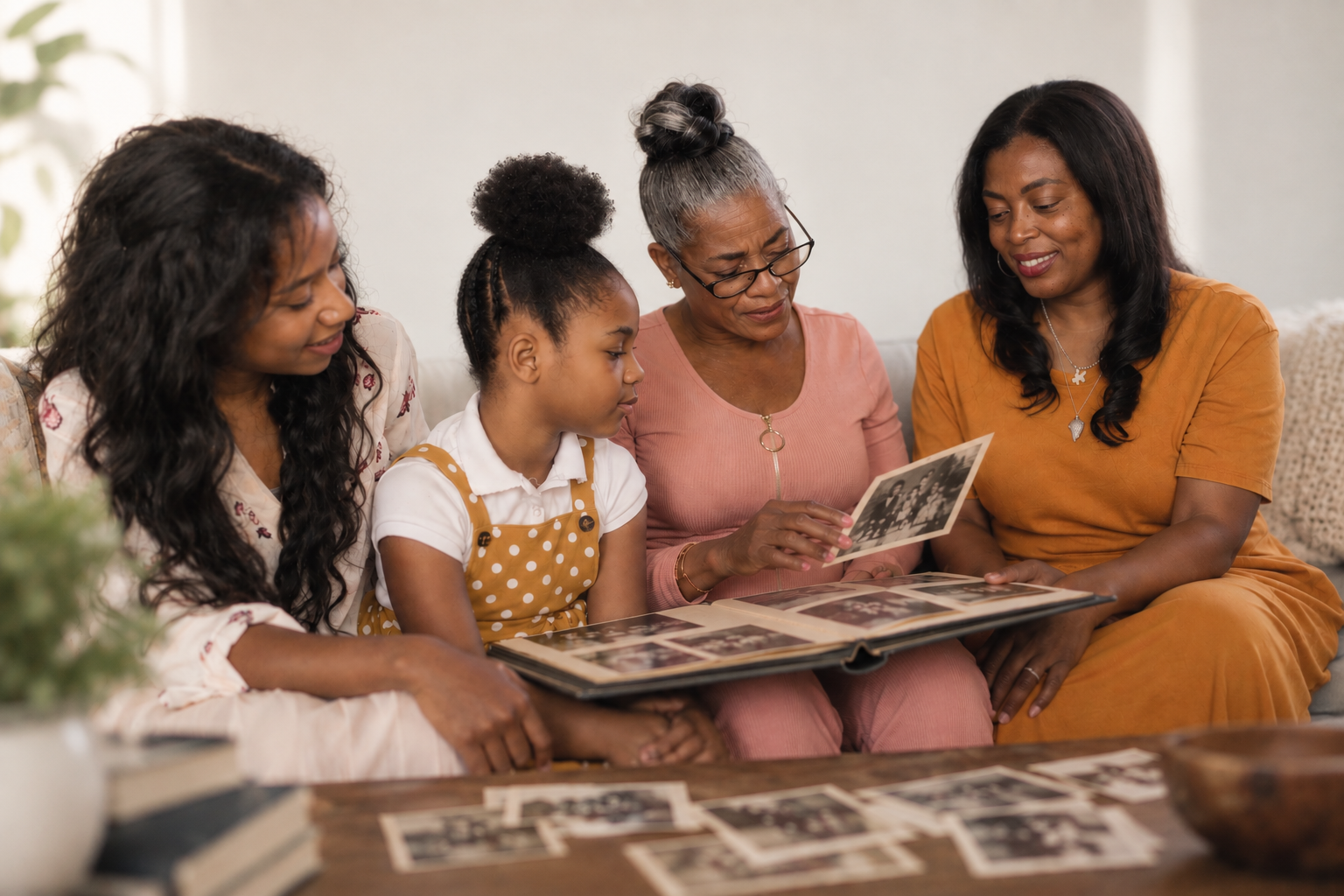
Sometimes we teach children about history while overlooking the history sitting at the dinner table.
Ask an older relative:
Where did our family live when you were a child?
What did your parents do for work?
What was school like?
What church did you attend?
What traditions did your family keep?
What did your parents teach you about being Black in America?
What historical events do you remember personally?
Suddenly, history has a voice.
A teenager studying the Great Migration may discover that a grandparent's family moved from South Carolina to New York. A lesson about school integration may lead to a relative's memory of attending a segregated school. A discussion of Black churches may uncover generations of family faith and community involvement.
Encourage students to record these conversations, with permission, and then turn one memory into a short written narrative.
Dates matter. Historical figures matter. But ordinary people also leave historical records.
Take-away: This month, don't just ask your child to research someone else's Black history. Ask, "What Black history is already part of our family story?"
Write it down. Names, sayings, recipes, church traditions, photographs, migration stories, family businesses, struggles, and victories can disappear surprisingly quickly when one generation assumes the next generation already knows them.
This kind of personal history also pairs naturally with The Capable Scholar's writing and guided life-story resources. Sometimes the most meaningful history project begins not in a textbook, but with a conversation between generations.